
What Causes Basement Wall Cracks?
Pressure, movement, and moisture working against your foundation.
Basement wall cracks typically form from hydrostatic pressure caused by saturated soil, expanding clay soils, foundation settlement, or poor exterior drainage. As pressure builds against the foundation, water is forced through weak points in the wall, eventually leading to visible cracking and leads.
Why Basement Wall Cracks Are a Serious Problem
Small cracks can turn into major foundation issues.
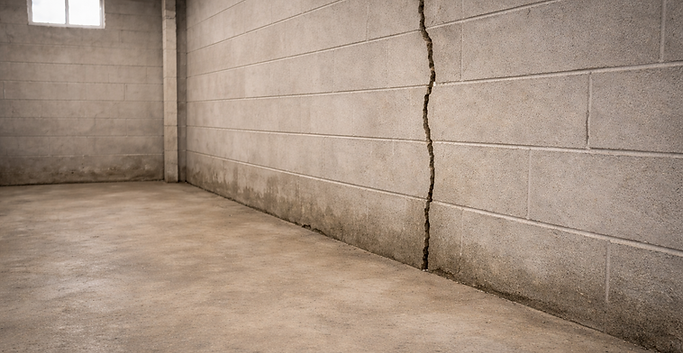
Even minor cracks can allow groundwater and moisture vapor into your basement. Over time, this leads to mold growth, musty odors, wall deterioration, and increased risk of structural damage. In Central North Carolina's wet climate, untreated cracks almost always worsen.
Our Basement Crack Wall Repair Approach
Fixing the crack and controlling the water behind it.
We start with a detailed inspection to determine whether the crack is structural or non-structural. Repairs may include professional crack sealing or injection systems, combined with waterproofing solutions that address water pressure behind the wall. Our focus is long-term protection, not temporary surface fixes.
Carbon Fiber Wall Reinforcement
Stop cracks from spreading—without rebuilding your foundation.
Carbon fiber wall strips are one of the most effective reinforcement methods to stabilize cracked basement walls without invasive excavation. These high-strength carbon fiber strips are bonded directly to the foundation wall using industrial epoxy, creating a permanent reinforcement that holds the wall in place.
Once installed, carbon fiber strips prevent cracks from widening, bowing, or spreading, even under continued soil pressure and hydrostatic force. Because carbon fiber is stronger than steel and does not stretch, it locks the wall in its current position and stops further structural movement.
This solution is ideal for vertical wall cracks, stair-step cracks, and early signs of wall displacement, especially in poured concrete or block foundations. When combined with proper basement waterproofing and drainage control, carbon fiber reinforcement provides long-term structural protection without reducing usable space inside the basement.

Wall Anchors & Steel I-Beam Reinforcement
Wall anchor systems are installed by securing heavy-duty steel plates to the inside basement wall and anchoring them to stable soil outside the foundation using galvanized steel rods. This system counteracts soil pressure pushing against the wall and can gradually pull bowed walls back toward plumb over time. Wall anchors are ideal for walls with moderate to severe inward movement where exterior access is available.
Steel I-beam reinforcement is commonly used when exterior access is limited or when immediate, rigid support is required. Vertical steel beams are secured to the basement floor and framing above, locking the wall in place and preventing further bowing or collapse. This solution is often recommended for block foundation walls experiencing long horizontal cracks or visible deflection.
Both wall anchors and steel I-beams are designed to work alongside basement waterproofing and drainage systems. By relieving hydrostatic pressure and stabilizing the structure, these reinforcement methods help protect your foundation, preserve home value, and ensure long-term structural integrity.
Structural solutions for bowed, leaning, and failing basement walls.
When Basement Crack Repair Is the Right Solution
Basement crack repair is often ideal when leaks occur at specific crack locations, water intrusion happens during heavy rain, or visible wall cracking is present without major foundation movement. Our inspections ensure the repair matches the cause—not just the symptom.
Targeted repairs for isolated leaks and wall damage.
Schedule a Free Basement Wall Stabilization Inspection
Local experience. Proven systems. Honest solutions.
We specialize in crawlspace and basement waterproofing systems built for North Carolina homes. Our solutions are designed around local soil conditions, moisture patters, and foundation types to deliver long-term results you can trust.