
What Causes Structural Foundation Cracks?
Movement below the surface creates problems above it.
Foundation cracks commonly develop due to soil expansion and contraction, excessive moisture around the home, poor drainage, or improper load distribution. North Carolina soils are particularly strong to seasonal movement, placing repeated stress on foundation walls. Over time, this pressure can cause vertical cracks, diagonal fractures, stair-step cracking in masonry, or horizontal separation. Each crack pattern tells a story about what your foundation is experiencing — and understanding that story allows for the correct repair strategy.
Don't Ignore Structural Cracks in Your Foundation
Small cracks can signal major structural movement.
Structural cracks are often the first visible warning sign that a home is experiencing foundation movement. While some minor cracks can occur naturally as concrete cures, larger or expanding cracks typically indicate shifting soil, hydrostatic pressure, settling, or structural stress beneath the home. When ignored, these cracks can widen over time, allowing moisture intrusion, reducing structural stability, and leading to far more expensive repairs. Identifying the cause early is the key to protecting your home and avoiding long-term damage.
Types of Foundation Cracks We Repair
Every crack has a cause — and a solution.
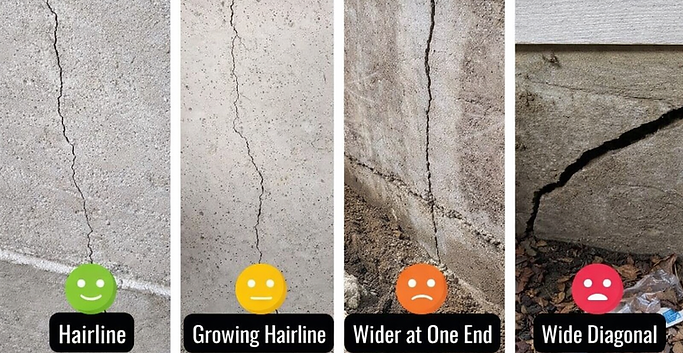
Not all cracks carry the same level of concern. Hairline cracks may form during normal curing, while diagonal or widening cracks often signal settlement. Horizontal cracks are typically the result of outside pressure pushing inward and should be evaluated quickly. Stair-step cracks in block foundations can indicate shifting footings or soil instability. At Revive, we thoroughly evaluate crack size, direction, and progression to determine whether the issue is cosmetic or structural, ensuring homeowners receive the right repair — not unnecessary upsells.
Signs a Crack May Be Structural
Know when it's time to call a professional.
Homeowners should monitor cracks that appear suddenly, grow over time, measure wider than approximately 1/8 inch, or run diagonally across walls. Additional warning signs often include sticking doors and windows, sloping floors, drywall cracks, or gaps forming around trim. These symptoms suggest the home may be shifting unevenly. When multiple signs appear together, a professional inspection becomes critical to prevent compounding structural damage.
Our Structural Crack Repair Process
Diagnose first. Repair permanently.
Schedule Your Structural Crack Inspection
Get clarity before cracks become costly repairs.
If you've noticed foundation cracks or signs of structural movement, now is the time to act. Revive provides professional structural crack inspections for homeowners throughout Central North Carolina, including Raleigh, Durham, Chapel Hill, Burlington, Mebane, Greensboro, and surrounding communities. We'll identify the cause, explain what's happening beneath your home, and provide a clear path toward stabilization and protection.